Catalog No.: PC-28163Not For Human Use, Lab Use Only.
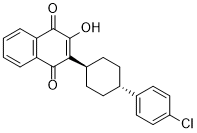
Atovaquone is a broad-spectrum anti-protozoal agent, inhibits electron transport in protozoa by targeting cytochrome bc1 complex, is also a potent STAT3 inhibitor that reduces STAT3 phosphorylation, target gene expression, and viability of STAT3-dependent cancer cells.
Atovaquone is a broad-spectrum anti-protozoal agent, inhibits electron transport in protozoa by targeting cytochrome bc1 complex, is also a potent STAT3 inhibitor that reduces STAT3 phosphorylation, target gene expression, and viability of STAT3-dependent cancer cells.
Atovaquone is used in combination with azithromycin for treatment of Babesia gibsoni and Babesia conradae infections and cytauxzoonosis.
Atovaquone is also an antimalarial agent, is active against the tissue cyst stages of T. gondii in animal models.
Atovaquone selectively blocks mitochondrial electron transport and ATP and pyrimidine biosynthesis in susceptible protozoa.
Atovaquone also is a cytotoxic and apoptosis inducing agent.
Atovaquone selectively increases chemosensitivity in retinoblastoma via mitochondrial dysfunction-dependent oxidative damage and Akt/AMPK/mTOR inhibition.
Atovaquone inhibits STAT3 phosphorylation, the expression of STAT3 target genes, and the viability of STAT3-dependent hematological cancer cells
Atovaquone inhibits tumor growth and prolongs survival in a murine model of multiple myeloma.
Atovaquone binds STK31 and reduces its expression and kinase activity, demonstrating anti-tumor effects against GBC both in vitro and in vivo.