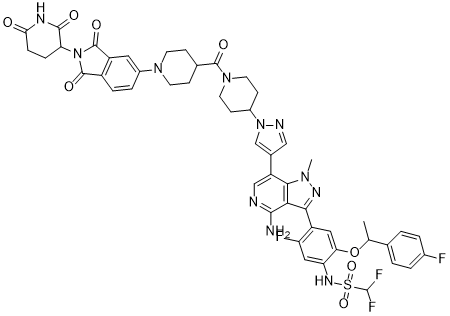
Chemical Structure : MLKL PROTAC C116
CAS No.:
MLKL PROTAC C116
Catalog No.: PC-26404Not For Human Use, Lab Use Only.
MLKL PROTAC C116 is a potent and selective MLKL degrader with DC50 of 248.9 nM in Hepa1-6 cells and 271.3 nM in HepG2 cells, Dmax of 99.3% and 91.2% respectively.
Bulk size, bulk discount!
E-mail: sales@probechem.com
Tech Support: tech@probechem.com
Purity & Documentation Purity:
>98% (HPLC)
Biological Activity
MLKL PROTAC C116 is a potent and selective MLKL degrader with DC50 of 248.9 nM in Hepa1-6 cells and 271.3 nM in HepG2 cells, Dmax of 99.3% and 91.2% respectively.
C116 exhibits potent degradation activity with 90% and 81% MLKL protein degradation at 1 μM in Hepa1-6 and HepG2 cells, respectively.
C116 induces robust and rapid MLKL degradation as early as 2 h, with over 90% MLKL protein reduction, in Hepa1-6 cells.
C116 mediated MLKL degradation is a proteasomal and CRBN dependent PROTAC-induced substrate degradation.
C116 (1-10 uM) enhances parthanatos upon palmitic acid (PA) stimulation in Hepa1-6 cells and HepG2 cells, thereby promoting cytotoxicity in HCC cells.
C116 (10 mg/kg, i.p. daily) inhibits tumor growth in orthotopic HCC model, does not induce weight loss and is well tolerated in the treated mice.
C116 significantly reduced MLKL protein in the murine colorectal cancer cell lines Colon26 and CT26, murine triple-negative breast cancer (TNBC) cell line EMT6, murine lung cancer cell line LLC, and human colorectal cancer cell line HT29.
Physicochemical Properties
|
M.Wt
|
1026.04
|
|
Formula
|
C49H47F4N11O8S
|
|
Appearance
|
Solid
|
|
CAS No.
|
|
|
Storage
|
- Solide Powder
-
-20°C 12 Months; 4°C 6 Months
|
- In Solvent
-
-80°C 6 Months; -20°C 6 Months
|
|
Shipping
|
|
|
Solubility
|
10 mM in DMSO
|
|
Chemical Name/SMILES
|
N-(4-(4-Amino-7-(1-(1-(1-(2-(2,6-dioxopiperidin-3-yl)-1,3-dioxoisoindolin-5-yl)piperidine-4-carbonyl)piperidin-4-yl)-1H-pyrazol-4-yl)-1-methyl-1H-pyrazolo[4,3-c]pyridin-3-yl)-5-fluoro-2-(1-(4-fluorophenyl)ethoxy)phenyl)-1,1-difluoromethanesulfonamide
|
References
1. Chen C, et al. J Med Chem. 2026 Mar 16. doi: 10.1021/acs.jmedchem.5c03302.
Contact Us
sales@probechem.com